
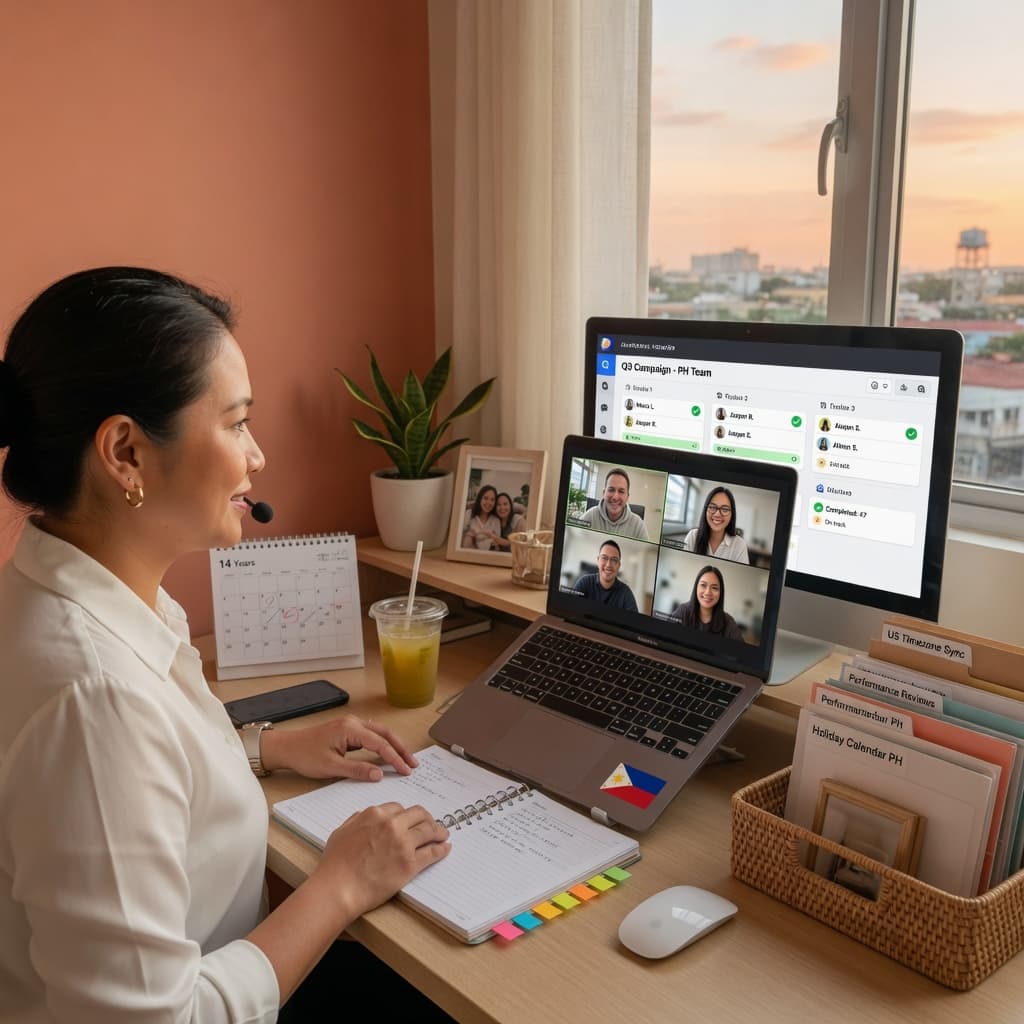
14 Years Managing Philippine Remote Teams: What Every US Founder Gets Wrong
It is no secret that the Philippines is one of the greatest hubs for remote talent in the world. Their English proficiency is incredibly high, their work ethic is unmatched, and their culture is deeply hospitable.
But over the last 14 years at TaskBullet, we have watched countless US founders completely fail at managing their Philippine VAs. They churn through assistants, get frustrated, and blame the talent.
The talent isn't the problem. The management style is. Here is what US founders get wrong.
1. Misunderstanding "Yes, Sir"
In Philippine culture, saving face and showing respect is paramount. If you give a VA a highly confusing task and ask, "Does that make sense?", their cultural instinct is to say "Yes, Sir/Ma'am." They aren't lying to you; they are trying to be respectful and figure it out on their own to avoid burdening you. The Fix: Never ask "Does that make sense?" Instead, ask: "Can you walk me through the steps you are going to take to complete this, just so I know I explained it correctly?"
2. Treating Them Like Vending Machines
Western business culture is highly transactional. Philippine culture is highly relational. If you only ever talk to your VA to issue demands and point out errors, they will eventually burn out and find a client who values them. The Fix: Spend 5 minutes on Monday asking about their family. Acknowledge their holidays (like Holy Week). Send a bonus for their birthday. When a Filipino worker feels valued as a human being, their loyalty and output will blow you away.
3. Punishing Mistakes Harshly
If a VA makes a mistake and you react with anger, you will trigger a cultural "freeze." Because of the desire to avoid conflict and save face, the VA will become terrified of making another mistake. Their speed will plummet, and they will start running every tiny decision past you, defeating the purpose of outsourcing. The Fix: View the first 30 days as a mutual training period. When a mistake happens, assume your instructions (SOP) were flawed first. Say, "I must not have explained this well—let's look at it together."
If you treat a Philippine Virtual Assistant with dignity, provide clear video instructions, and respect their cultural communication styles, you won't just get an assistant. You will get a dedicated team member who will run your operations for years.